
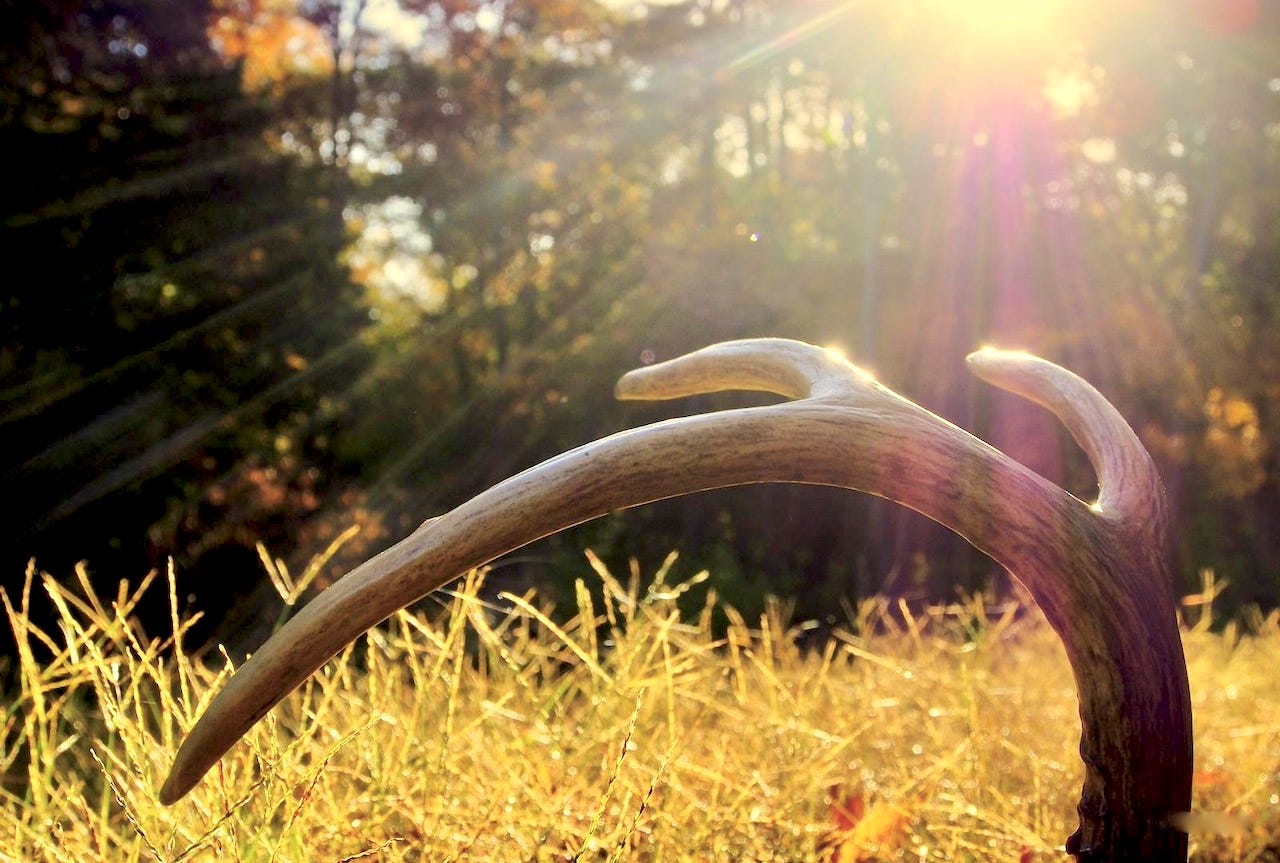
I trace my Scottish lineage, through my maternal grandmother, back to Clan Stewart. Not to brag, but Clan Stewart, if you don’t already know (and why would you), has a lot of royalty pulsing through its lengthy bloodline. The first of us came to the British Isles from France (we were big deals over there, too) in the 12th century and promptly got to work seeding the land with a people who wound up heavily influencing and then dominating Scotland and England for more than 300 years.
All this talk of royal bloodlines is sort of interesting if you’re into living vicariously through family and believe it somehow elevates your status. I am not and do not. Nope, none of that history matters a tinker’s damn to me. Nobility in the aristocratic sense did not travel with my branch of the clan as we crossed the Atlantic. I’m not sure why and don’t care enough to find out. Suffice it to say, pauper by birth I have been and have not thought much about the reasons.
But those deeper, older, and undying remnants of Scottish culture derived from Celtic culture are ingrained in my bones. I feel their longings for the old home and often peer back through the foggy history of centuries past and across the waters (with digital assistance, of course) to the Scotland of today searching for a broader understanding of who I am and of the place where some of me comes from. That led to the discovery of this lovely and informative piece by Roddy Maclean enveloping this even lovelier phrase that warmed the cockles of my Scots-Irish hunter’s heart:
“October, the name of which month in Gaelic is An Dàmhair ‘the deer rut’”
I’ve read those words every day of this October.
The native deer of Scotland are the roe deer and the red deer. Roe deer are smaller forest and edge dwellers, much like whitetails because roe deer and whitetails are closely related. Roe deer even look similar to whitetails, though, smaller-bodied and with smaller antlers. But roe deer bucks harden those little antlers in spring and rut in the heat of summer. While this knowledge might seem trivial, it means roe deer aren’t the deer of An Dàmhair. 1
So based on this information about roe deer, we know that An Dàmhair must refer to the red deer and their roaring, wild-eyed autumn breeding rituals. From what I’ve read, red deer are the default idea of “deer” across most of Europe. 2
As the whitetail is to the roe deer, so is the American wapiti to the red deer except the family connection is even tighter. The fissure was not that long ago, relatively speaking. Heck, up until just a few decades back, wapiti were thought to be a subspecies of red deer. But now biologists say otherwise and split them into separate species.
Splitting is an inherently human thing to do. We have this compulsive need to categorize and sub-categorize—species, bloodlines, etc.—in a never-ending quest for understanding, though, it often leaves us more confused. So let’s step away from separating and focus on merging—specifically that of the visceral, spiritual, and the continuum. Let’s focus on an older understanding of the intimate connections between those three brought to our attention in Mr. Maclean’s essay.
What we speak into existence when we say “An Dàmhair” is a great convergence, a simplification layered in richness but one that needs no other words. The deer is melded with the very season, transcending their role as prey or as simply fauna. Boundaries of the most basic sort—lines between the abstract and the tangible—dissolve until everything is indistinguishable. There is no separation between the high country and the moors, between autumn and the deer, between now and then. All is one.
This collective “one,” is an idea of “place” I’ve long thought ineffable. But it is perfectly encapsulated by An Dàmhair.
Whitetail bucks don’t bellow like red deer, but I would know the season by the sights, smells, and sounds of their secretive rituals. As autumn winds stir oak leaves, the past and present blur. My Arkansas woods and those far-off Scottish wildlands merge in a single, eternal landscape. The whitetails tell me it is October just as the red deer told my kin from so long ago and so far away.
An Dàmhair becomes a living, breathing nexus of land, spirit, culture, and time—a singularity. It’s an understanding of who I am that resonates with low vibration, pulsing and thrumming on the visceral level. It’s a blood connection far more corporeal and believable than any ties I might have to a throne and crown.
This just-learned info also cleared a vexing question from my childhood:
For those of you like me who know good and damn well that deer are never “twitterpated” in the spring and summer—well, we made some poor assumptions. To be fair, we were misled by a rewrite and marketing. The original book, Bambi: A Life in the Woods (1923), was penned by Austrian Felix Salten whose protagonist was a small, native European forest deer Mr. Salten, as a hunter, knew well—a roe deer. Not a whitetail. Disney’s Americanized cartoon version was supposed to be a whitetail, they just didn’t follow through with the character specifics. But Disney wholesale turned a deep and compelling coming-of-age/political allegory (the Nazis banned this book) into a shallow, sappy, infantile ideological wreck. Why would we expect basic biological accuracy from them?
When someone mentions “deer” in Europe, the image of a red deer typically springs to mind. You see the likeness of red deer in marketing for lots of companies. Glenfiddich Scotch, Jägermeister (which translates to “hunt master”), and even The Hartford insurance company based in Hartford, Connecticut. A “hart” is a male red deer. “Ford” means to cross a stream. You get the picture. Tragically, red deer are also farmed extensively, which feels like desecration to me. They’ve also been introduced all over the world for food and sport (another form of sacrilege), sometimes outcompeting native species.