
Another chapter
Though I'm barely a quail hunter, my story has been shaped profoundly by the sweet song and charming presence of bobwhite
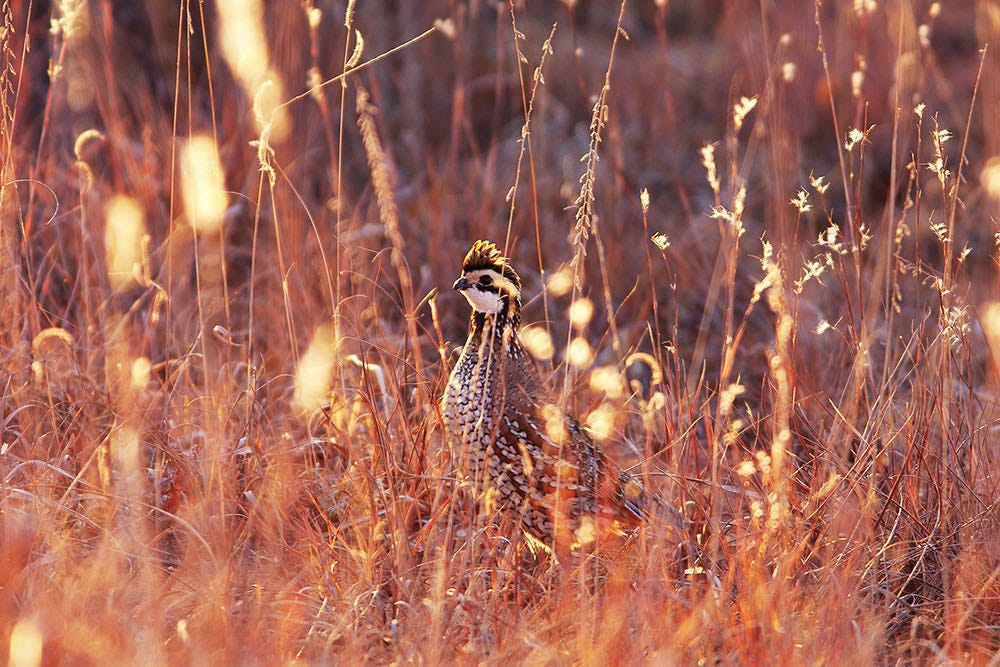
There were no quail hunters in my family on either side of the tree. In the Ozarks and river valley of Arkansas, we hunted squirrels and deer in the forests. We shot rabbits as they scampered from the greenbrier with the tenor bawl of beagles filling January air. But the first time I gripped a shotgun behind the point of a polished setter was just a week shy of my 49th birthday. It happened in February of 2020.
That first hunt for bobwhite was far from my first introduction to quail, though. On the contrary, the bird and I have a story that goes back decades
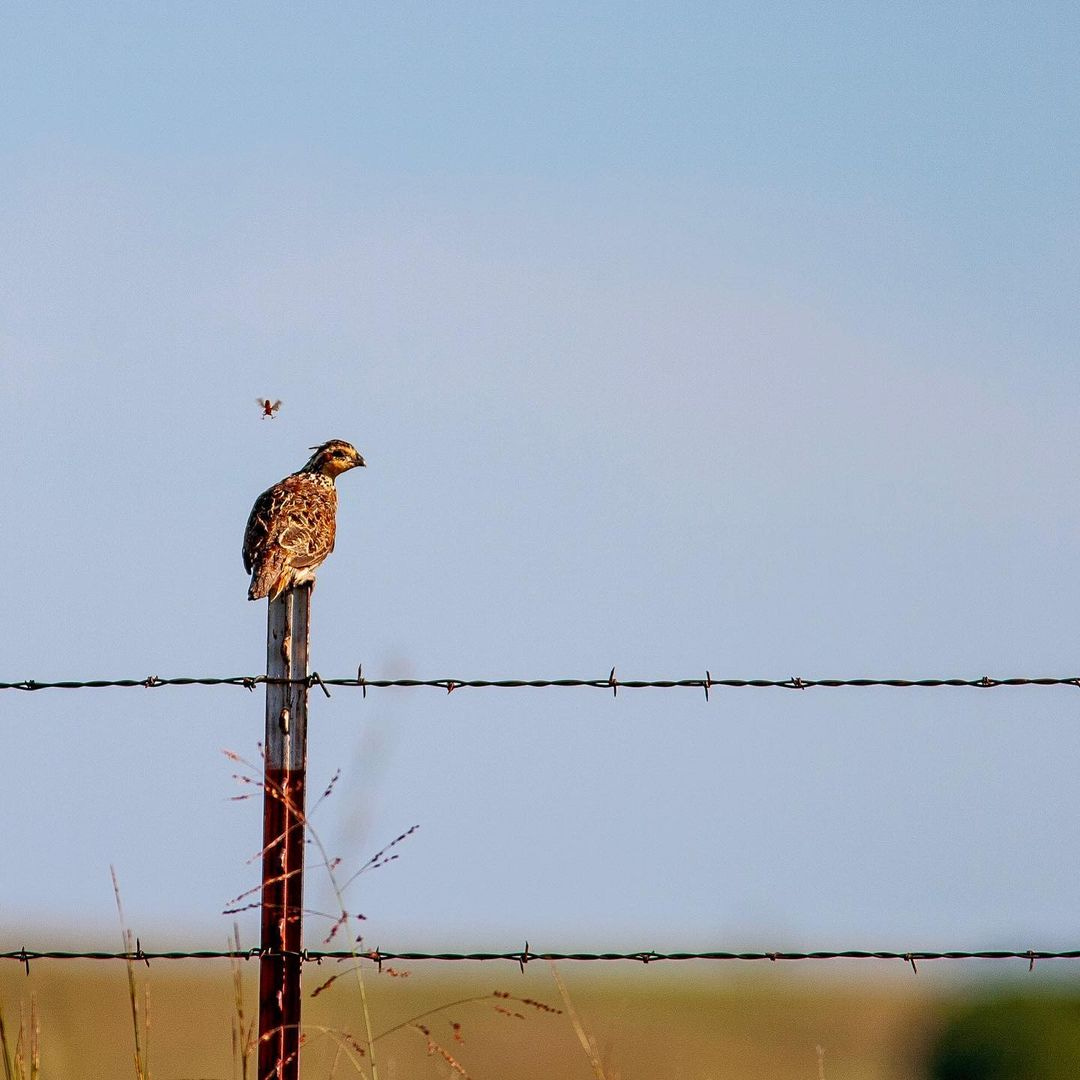
I grew up on the tail end of the bobwhite’s golden age in rural western Arkansas. Quail were a common sight in the fields, on fenceposts, crossing dirt roads. We saw them everywhere, which only adds to the puzzlement of why we didn’t hunt them. Despite my Southern heritage, it was likely subtle cultural differences, generations of hand-to-mouth existence that couldn’t make sense of good money spent on expensive guns and valuable time spent training dogs in exchange for a few six-ounce birds. With a bloodline extending back to Appalachia and always poor, utilitarian practicality won out over sport and style. We hunted deer with walker and bluetick hounds, for Pete’s sake, long-legged dogs selected precisely because they needed little encouragement to chase a deer out of the hollows to save ourselves some time and effort.
But I experienced autumn flushes as a sidenote. The first happened on my way to a ridge of hickory trees heavy with mast. Squirrels were on my mind as I skirted a little thicket in the dreary half-light of predawn, and the explosion of whirring, feathered little bodies nearly jolted my 10-year-old soul right out of my body. I busted the covey a few more times that fall and winter on my way to the hickories, always resulting in a thumping heart and PG-rated swears.
One morning I decided to wait for early rays to probe the thicket before pushing through. I wanted to see the birds on the ground, watch them gather for secret rituals to start their day. But after half an hour and with the sun now well over the horizon, I hadn’t seen a hint of movement and decided to carry on with my squirrel-killing plans. Ten casual steps later, a whirlwind of bobwhites erupted underfoot, scaring the bejesus out of me again and prompting another muttered oath.
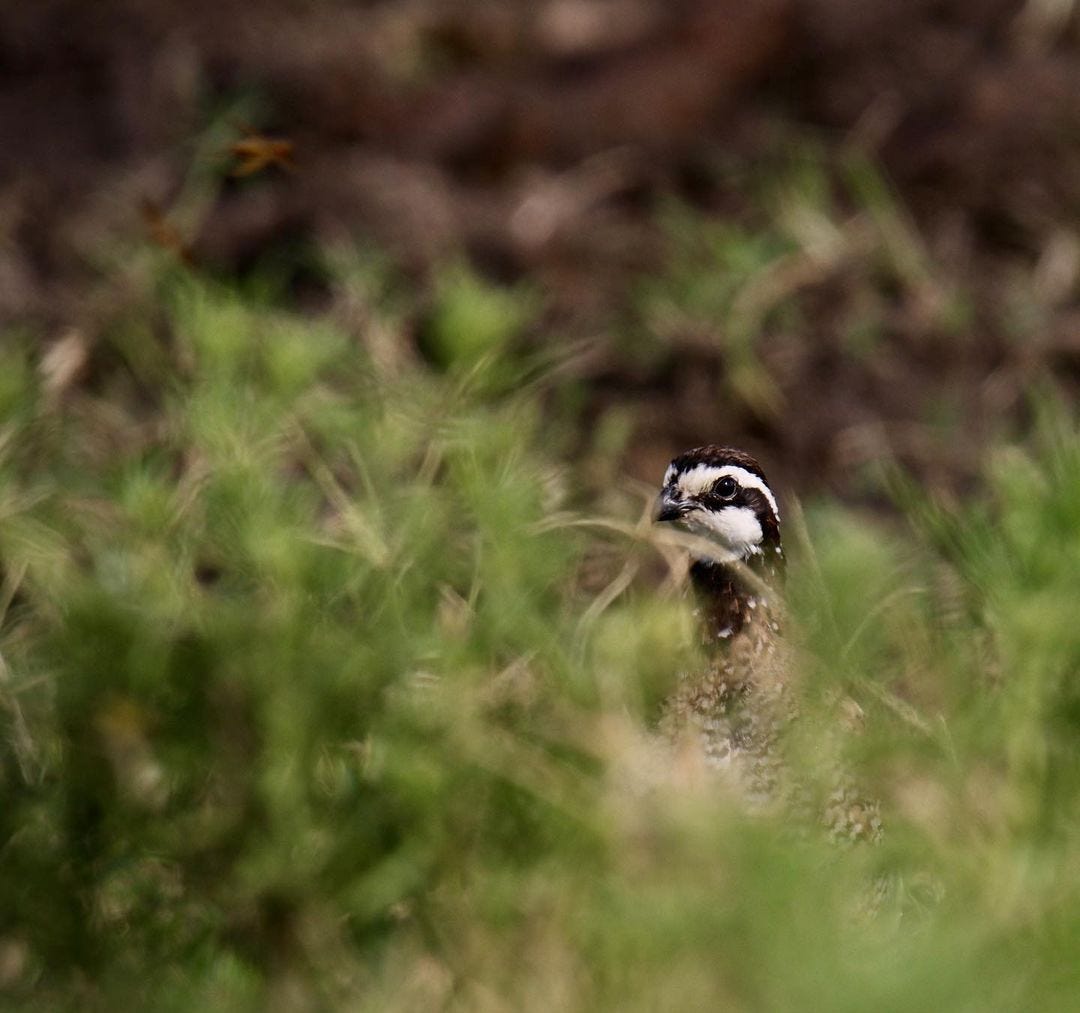
Bird watching had been a favorite activity from earliest memories. And while watching bobwhites was as entertaining as any other, the audible evidence of quail was much more than just bird song. Bobwhite’s music was the melody of late spring.
Those plaintive notes, crisp as a fresh June cucumber, were the song of wildflowers and hay fields. They were the song of summer’s promise just around the corner and days free from the confines of classrooms and homework, days that a boy could roam feral with feet caked in mud and hands reeking of bluegill. They were the anthem of catching crawdads and fence lizards, of plucking plump blackberries from their thorny hideaways near the forest’s edge.
I learned the quail’s song fairly quickly. I also learned that by sitting fence-post still on the pond bank I could whistle the birds up to nearly spitting distance. For the quail, it was all about the hormones. I hit the right notes in just the right cadence, opening that little spigot of testosterone. But for me, it was mysterious wild magic I could conjure up with a breath. Those early conversations with quail, I’m sure, are the root of my obsession with talking to wild turkeys and why I still can’t help but reply to the probing “who cooks for you” of a barred owl.
But as I grew into a teenager, the quail’s song faded from the dusty back roads. Some of the rural mystique central to my life faded as well.
What happened to quail in western Arkansas? The answer is complicated, ranging from more efficient farming practices to plain-old short-sighted thinking. But the condensed version is that the wheels of progress crushed them and their habitat.
Brushy fence lines were “cleaned.” Fields once left fallow, growing lush with native vegetation, were plowed and seeded in fescue. We decided it was all or nothing with our forests, either cutting them flat or letting them grow into a claustrophobic tangle, starving the understory of light, choking out native grasses that served as cornerstones for an ecosystem in which bobwhite quail and other species flourished.
What happened was we very nearly killed off the bobwhite, though, we did it slowly and indirectly, by destroying its habitat.
But, thankfully, we learned from our mistakes.
Just a few years ago, the Arkansas Game and Fish Commission (AGFC) got serious about bobwhite restoration in what was probably the last opportunity to do so before quail became a hollow memory for some and an unknown to many. As AGFC Deputy Director Chris Colclasure told me: “We wanted to do this while we still have people who remember what it was like to bird hunt and hear those birds whistling in the spring and summer. It would be much more difficult in the future to try to work with generations who didn’t know what those things were like. Without this effort now, bobwhite quail would just be a story to future generations, not an experience.”
AGFC went to work, partnering with Quail Forever along with other conservation nonprofits and federal agencies to bring back bobwhite. Their efforts involved turning to pre-European-settlement land practices, thinning and controlled burns of forests, to transform the landscape into something more like the savannah — once home to bison, elk, red wolves, and coveys of bobwhite quail — that once blanketed western Arkansas.
And it’s working, for the bobwhite, anyway. Though we found only one covey on my first-ever bird hunt, Pheasants Forever, Inc. and Quail Forever Arkansas State Coordinator Ryan Denier says that scenes like our 25-bird flush are becoming a regular occurrence across the state.
My hunt happened in an AGFC-managed wildlife management area, but more than 80 percent of Arkansas wildlife habitat is on private land. Reclaiming the back forty is an integral part of bringing bobwhite back.
Austin Klais, coordinating wildlife biologist for Pheasants Forever, Inc, and Quail Forever, worked with Arkansas landowners for more than two years. Austin said that quality habitat practices build momentum when the quail come back. “When land owners or managers see quail numbers increasing on their property after implementing quail management practices, they start telling their neighbors,” Austin said. “The neighbors begin implementing these practices. Quail start to become common across that landscape.”
And while I’m sure that some private land owners manage their acreage with visions of dogs on point and feathers adrift on a breeze heavy with the lingering smell of gunpowder, I’d imagine that the wants of many aren’t much different than mine. Witnessing the quick steps of a covey cross the pasture and just hearing that sweet song is plenty for some of us. Men can be turned back into boys by those delightful notes.
“There is nothing like getting that first call from a landowner we’ve been working with,” Austin said, “and hearing, ‘Guess what! I just heard my first quail here in years!’
Sure, there’s a rich sporting tradition of family quail hunts with favorite guns and hard-working dogs. But the charm of a bobwhite’s voice ringing over dew-covered fields is a treasure all its own
Only three months after my first quail hunt, I found some of that treasure right in my backyard.
It was a particularly glorious May afternoon. A completely hopeless romantic might even call it enchanted for the sake of foreshadowing. Slanting sunbeams gilded new leaves and honeysuckle perfumed the cool green air as my wife and I gabbed with our rural next-door neighbors.
The conversation was about politics or the weather. Or it could have been about them becoming millionaires for all I recall because our suddenly unimportant words were interrupted by an earnest “bob-white” from the pasture just across our dirt road.
We all shut up and peered toward the fields as another whistle percolated up through the broom sedge and blossoming blackberry brambles.
I whistled back with a hen call. The little gentleman replied, and I was nearly overwhelmed with nostalgia.
The back and forth went on a few more times, and then I launched into some of my sappy reminiscing about an idyllic rural childhood, telling our neighbors about how I used to call up bobwhites like some young Arky Dr. Dolittle. My wife’s eyes had just started to roll (she's heard these tales ad nauseam for more than 25 years) when a buzzing ball of feathers interrupted me mid-sentence.
The bobwhite was flying right at me.
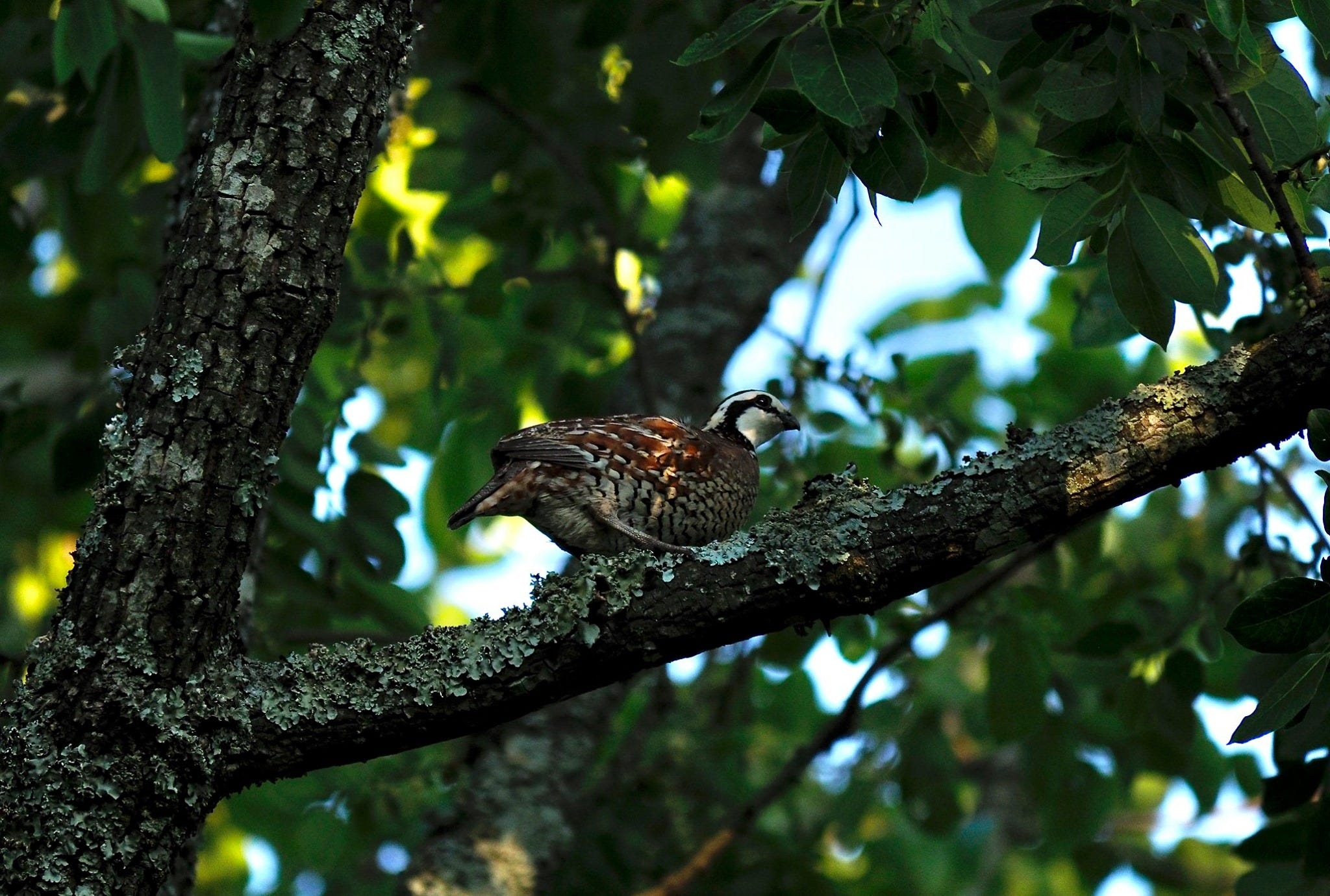
I thought he was going to light on my head -- which would have easily qualified as a major life event far above graduating college and just a rung or two below marriage and kids — but I sidestepped in shock. So the quail veered west and landed in a persimmon tree in our backyard. He sat on a limb 30 feet up, puzzled no doubt, about why he couldn’t find that lonesome hen.
With a silly, surely child-like grin plastered across my middle-aged face, I walked to the tree and thanked him for the simple pleasure of his voice on a spring afternoon. It's a gift I wasn't sure I'd ever enjoy again. And I don’t think I quit grinning until sometime after I fell asleep with the dreamy almost prayerful wish that he would choose to stay. Because there is a part of me, a large part of me, that could never call a house a home unless I hear quail whistles while sitting on the porch.
I hope his covey surprises me sometime this fall as I traipse to the hickories heavy with mast. I hope his offspring cover these fields and woodlots like his ancestors did when I was a kid. I hope his kind sing to the glory of prairie roses in bloom and the promise of summer for generations to come.
And maybe we’ll meet again this winter as I stand at the ready behind a good dog. I’ll scan the tangles and not see one hint of a bird. I’ll take a few measured steps and he’ll flush from the understory along with a dozen of his kin. My heart will thump uncontrollably, and I’ll likely utter a swear in surprise and wonder at the sight.
We’ll write another chapter for our story.
Chad Love is not only an exceptional photographer but also — and I don’t say this lightly — one of the best writers I know. His image-accompanying prose on Instagram @dispatchesfromnowhere is elegant, powerfully evocative, and often leaves me wondering why I bother with writing at all in the face of such mastery. Many, many thanks to Chad for permission to use his gorgeous images.